
The problem
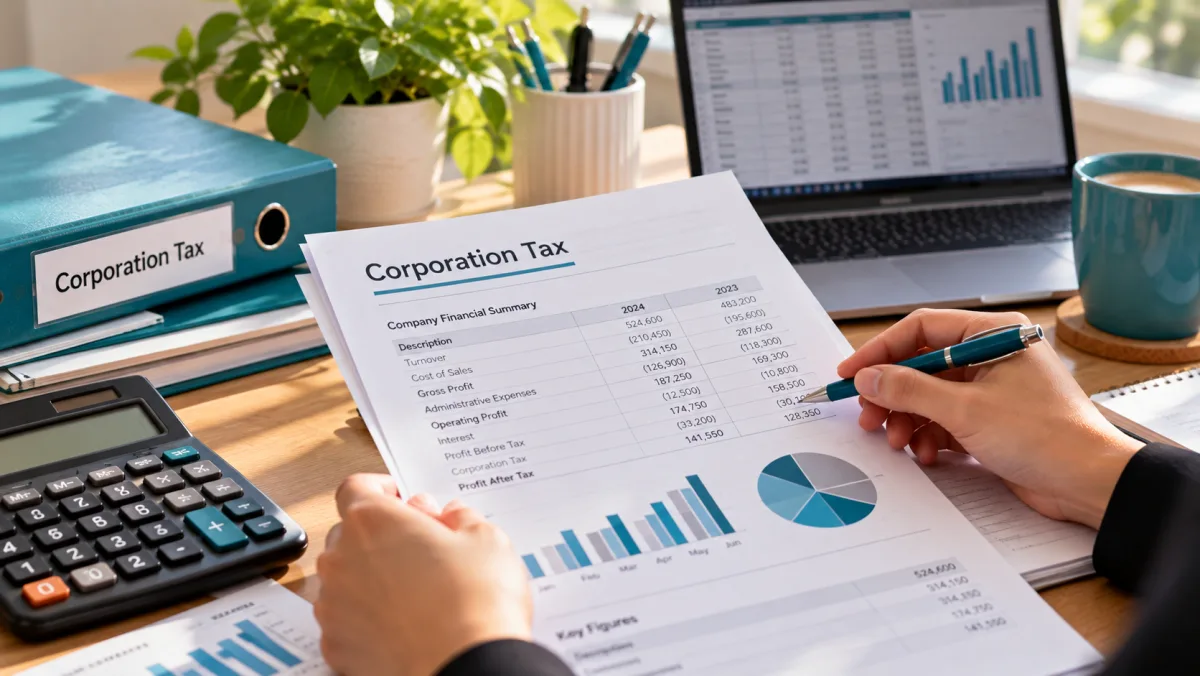
Corporation Tax isn’t a flat bill – it’s calculated from your company’s taxable profit after allowable deductions and reliefs, and getting the computation wrong means either overpaying or risking an HMRC enquiry.
What’s included
- Corporation Tax computation from your annual accounts
- Preparation and filing of your CT600 return
- Identification of allowable expenses and reliefs you’re entitled to
- Guidance on payment deadlines and how to budget for them
Who it’s for
Any limited company required to file a Corporation Tax return – this is a statutory obligation regardless of whether the company made a profit.
How it works
Once your annual accounts are prepared, we calculate the Corporation Tax due, prepare the CT600 return, and file it with HMRC within the deadline – explaining the figures to you before anything is submitted.
Pricing
Usually quoted alongside your annual accounts, since the two are prepared from the same records – see our Year-End Accounts page, or our Pricing page for what affects your quote.
FAQs
When is Corporation Tax due?
Corporation Tax is normally due nine months and one day after the end of your company’s accounting period, ahead of the return filing deadline itself. [Confirm current HMRC deadlines before publishing – also see the first-year timing note on our New Business Starter page.]
What’s the current Corporation Tax rate?
Rates depend on your company’s profit level and can change between tax years. [Confirm the current rate(s) against HMRC guidance before publishing – do not quote a figure without verification.]
Do I still need to file if the company made a loss?
Yes – a Corporation Tax return is still required even with no tax due, and a loss can often be carried forward or back against other profits, which is worth getting right.
Let’s talk about your business
Book a free, no-obligation consultation and we’ll talk through what you actually need.